
You’ll need one portable toilet per 10 workers for a standard 40-hour workweek in Boston, MA, following OSHA regulations. This ratio accommodates approximately 200 uses weekly per unit. However, Boston’s winter conditions can reduce processing capacity by 15-20%, requiring supplementary units during cold months. For events, you should plan one unit per 50-75 attendees for four-hour gatherings, or one per 35-50 for full-day events. Understanding these baseline ratios and the specific factors affecting your site will help you determine the ideal number of units.
When planning portable restroom requirements, the Occupational Safety and Health Administration (OSHA) mandates one toilet facility for every 10 workers during a standard 40-hour workweek.
However, you’ll need to adjust this baseline ratio based on specific event parameters. For construction sites exceeding 40-hour weeks, increase units proportionally—a 50-hour week requires 25% more facilities.
High-traffic events demand improved ratios: concerts and festivals typically need one unit per 50-75 attendees for four-hour events, while full-day gatherings require one per 35-50 people.
Boston’s climate considerations further impact these calculations. Winter events necessitate supplementary units due to reduced processing capacity in cold temperatures.
You’ll optimize user satisfaction and regulatory compliance by implementing real-time monitoring systems that track usage patterns and adjust deployment strategies accordingly.
See also: porta potty rental service near Boston MA
Standard portable restroom facilities require servicing every 300-500 uses under normal operating conditions, translating to approximately twice-weekly maintenance for a 40-person worksite.
You’ll need to adjust this baseline according to OSHA regulations, which mandate one toilet per 20 workers for construction sites.
Boston’s specific climate considerations—freezing temperatures, humidity fluctuations—impact waste tank capacity and chemical effectiveness, requiring modified servicing schedules.
For eight-hour shifts, calculate one unit per 10 workers for peak performance.
Extended projects benefit from real-time monitoring systems that track usage patterns and trigger service alerts.
PotSwift’s data analytics platform enables you to enhance placement density based on actual consumption metrics rather than outdated formulas.
Temperature extremes reduce effective capacity by 15-20%, necessitating increased service frequency during Boston’s seasonal changes.
Multi-day events and extended construction projects demand exponentially increased servicing frequencies that standard calculations don’t account for.
You’ll need to adjust your ratio from the typical 1:10 baseline to accommodate cumulative waste accumulation. OSHA regulations mandate functional facilities throughout project duration, requiring service intervals every 2-3 days for week-long events versus weekly for standard operations.
For construction projects exceeding seven days, you’re looking at 1:8 ratios with bi-weekly servicing minimum.
Marathon events spanning 3+ days require 1:7 ratios with daily pump-outs to maintain compliance and user satisfaction.
Temperature fluctuations in Boston’s climate accelerate decomposition rates, necessitating 15-20% supplementary capacity during summer months.
PotSwift’s data analytics show that projects exceeding 14 days achieve ideal performance with dedicated service schedules rather than on-demand maintenance, reducing downtime by 40% while ensuring regulatory adherence.
Beyond baseline calculations, your weekly porta potty requirements fluctuate based on six empirically validated variables that OSHA and EPA documentation consistently reference.
Temperature directly impacts usage frequency—heat increases consumption rates by 25-40%, elevating restroom visits.
Event duration multiplies demand; 10-hour workdays require 30% more units than 8-hour shifts.
Demographics matter considerably—mixed-gender sites need 1:3 male-to-female ratios due to biological differences in facility time.
Alcohol availability at events increases usage by 15-20% per capita.
Food service presence accelerates digestive cycles, demanding supplementary capacity.
Site accessibility determines whether workers can reach facilities within OSHA’s mandated 10-minute walking distance.
PotSwift’s algorithmic calculator integrates these variables, delivering optimized unit quantities that prevent regulatory violations while maximizing cost-efficiency for Boston-area projects.
When calculating weekly porta potty allocation, operational hours function as a multiplier that directly scales your sanitation infrastructure requirements.
You’ll need to adjust your baseline ratios based on daily usage duration, as extended operational windows compound waste accumulation and reduce effective service capacity.
Industry data demonstrates clear correlation between operational hours and required units:
Boston’s municipal health code mandates functional facilities throughout operational periods.
You’re legally required to maintain accessibility, making hour-based calculations critical for compliance and user satisfaction.
Different venues generate distinct sanitation demands that override generic per-person calculations.
Construction sites require one unit per ten workers for standard eight-hour shifts, per OSHA 1926.51 regulations.
Special events demand higher ratios—you’ll need one toilet per 50 attendees for four-hour gatherings, increasing to one per 40 for alcohol-served functions where usage spikes 30%.
Festivals exceeding eight hours necessitate one unit per 25 guests, with ADA-compliant facilities comprising 5% of total inventory.
Industrial sites with hazmat exposure mandate separate handwashing stations beyond basic units.
Music venues peak at 15-minute intervals, requiring strategic placement near high-traffic zones.
Boston’s Building Code 105.2 requires permit compliance documentation.
You’re optimizing operational efficiency when matching unit type—standard, flushable, or luxury—to venue-specific behavioral patterns and municipal requirements.
Food and beverage service accelerates restroom usage by 40-60% compared to events without refreshments, according to EPA sanitation studies.
You’ll need to adjust your porta potty calculations when serving food and drinks at your Boston event or job site.
Calculate extra units based on these consumption patterns:
PotSwift recommends tracking your event’s refreshment schedule to determine peak demand periods and ideal unit placement throughout your venue.
Because Boston hosts diverse events and maintains strict public health standards, you’ll find varying porta potty requirements across different scenarios throughout the city.
Marathon events along the 26.2-mile course necessitate one unit per 50 runners at start/finish zones.
Construction sites in Boston must provide one toilet per 20 workers for projects under 40 hours weekly.
The Boston Common’s summer concerts require one unit per 250 attendees, plus 20% accessible units under ADA compliance.
Street festivals in neighborhoods like the North End necessitate one porta potty per 150 people for four-hour events.
Harbor festivals add 30% capacity due to limited permanent facilities.
Wedding venues without adequate restrooms need one unit per 75 guests for six-hour receptions.
These benchmarks guarantee compliance while optimizing guest experience.
OSHA mandates that construction sites provide one toilet facility for every 20 workers, with supplementary units required when work shifts extend beyond standard hours.
You’ll need to calculate your requirements based on crew size, shift duration, and project timeline. Boston’s construction regulations align with federal standards, but you should account for site-specific factors that impact usage patterns.
Key calculation factors for construction sites:
You’ll optimize costs while maintaining regulatory compliance through data-driven porta potty allocation.
When planning festivals and outdoor gatherings in Boston, you’ll need one portable toilet for every 50 attendees during events lasting up to four hours, with that ratio increasing to one unit per 40 people for extended events.
Massachusetts Department of Public Health regulations mandate adequate facilities based on crowd density and duration metrics. For alcohol-serving events, you’ll want to increase capacity by 15-20% due to heightened usage patterns.
Data from Boston’s Esplanade concerts demonstrates that peak usage occurs between hours two and three, requiring strategic placement to minimize queue times.
PotSwift recommends installing supplementary units for events exceeding 1,000 attendees, with separate facilities designated for accessibility compliance under ADA standards.
Temperature-controlled options improve user experience during extreme weather conditions.
Regular servicing schedules for portable toilets depend on three critical variables: user volume, duration of placement, and environmental conditions.
You’ll need to establish a maintenance protocol that prevents sanitation failures and maintains regulatory compliance throughout your event or project timeline.
Weekly Servicing Planning Factors:
Boston Porta Potties Rental PotSwift provides GPS-tracked servicing with real-time capacity monitoring for ideal resource deployment.
Effective maintenance protocols require predetermined service intervals that align with your project’s operational demands and sanitation standards.
You’ll need to establish cleaning frequencies based on usage metrics—standard construction sites typically require twice-weekly servicing, while high-traffic events demand daily maintenance cycles.
Boston’s health regulations mandate specific sanitation benchmarks you must meet.
Monitor waste tank capacities through usage data analytics; most units reach 75% capacity within 3-4 days under normal conditions.
You should implement GPS-enabled monitoring systems that track real-time fill levels, enabling proactive service dispatch rather than reactive maintenance.
Schedule cleanings during off-peak hours to minimize operational disruption.
PotSwift’s automated scheduling platform optimizes route efficiency and guarantees regulatory compliance.
You can adjust service intervals dynamically using our data dashboard, which analyzes historical usage patterns and predicts maintenance requirements with 94% accuracy.
Since waste accumulation rates directly impact sanitation compliance, you’ll need to implement systematic monitoring protocols that track tank capacity, usage frequency, and chemical levels across your rental units.
Boston Porta Potties Rental PotSwift employs digital tracking systems that provide real-time data on waste levels, enabling proactive service scheduling before units reach critical capacity thresholds.
Key monitoring metrics include:
Implementing sensor-based monitoring technology reduces emergency service calls by 40% while ensuring Massachusetts Department of Public Health compliance.
You’ll receive automated alerts when units require attention, allowing dynamic route optimization and preventing sanitation violations that could result in $500-$5,000 fines per incident.
Beyond tracking waste levels, maintaining ideal sanitation standards requires systematic attention to comfort features that directly affect user compliance and public health outcomes.
You’ll need hand sanitizer stations with 60%+ alcohol content at each unit entrance, backed by CDC recommendations for pathogen reduction.
Install adequate ventilation systems to minimize ammonia buildup—OSHA mandates proper airflow in confined spaces.
Schedule professional cleaning every 2-3 days for standard events, or twice daily for high-traffic venues exceeding 100 users per unit.
You should implement touchless features where feasible: foot-pump sinks, hands-free door latches, and motion-activated lighting.
Temperature control matters—units above 85°F accelerate bacterial growth by 40%.
Deploy ADA-compliant units with proper handrails, wider doorways, and non-slip flooring to meet regulatory requirements while enhancing accessibility for all users.
While portable toilets provide essential facilities, proper hand hygiene infrastructure determines whether your event meets Massachusetts Department of Public Health requirements.
You’ll need strategically positioned handwashing stations to complement your porta potty setup.
Recommended handwashing station ratios:
Boston’s health codes mandate accessible handwashing facilities at food-related gatherings.
You’re investing in regulatory compliance and attendee confidence.
Modern sensor-activated stations enhance efficiency while reducing cross-contamination.
PotSwift integrates hygiene stations that align with CDC guidelines and Massachusetts state regulations.
Under the Americans with Disabilities Act and Massachusetts Architectural Access Board regulations, you’re legally required to provide accessible restroom facilities at public events and construction sites. ADA-compliant units must comprise a specific percentage of your total porta potty inventory based on total count.
| Total Units | Standard Units | ADA Units Required | Compliance Ratio |
|---|---|---|---|
| 1-5 | 4-5 | 1 | 20% minimum |
| 6-20 | 17-19 | 1-2 | 10-15% |
| 21+ | Variable | 2+ | 8-10% |
ADA units feature wider doorways (minimum 32 inches), interior handrails, lower toilet heights, and sufficient turning radius (60-inch diameter) for wheelchair maneuverability. You’ll need further placement considerations: position these units on level ground with accessible pathways, avoiding slopes exceeding 1:12 grade ratios. Non-compliance triggers penalties reaching $75,000 for initial violations.
You’ll face OSHA fines ranging from $7,000-$15,000 per violation for inadequate restroom facilities at construction sites. Boston’s health department may issue stop-work orders, while employees can file complaints triggering costly inspections and potential project delays.
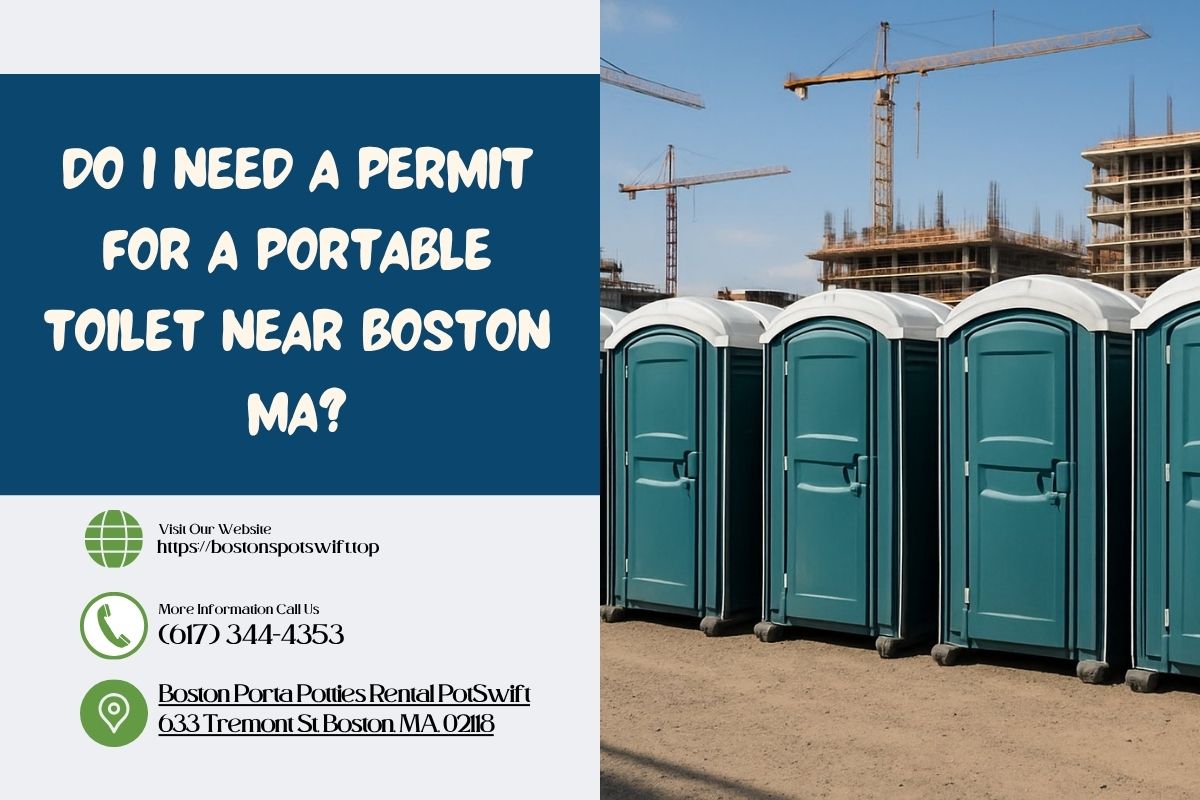
Yes, you’ll need a Public Works permit before placing porta potties on Boston streets or sidewalks. Applications require site plans and proof of insurance. Processing typically takes 5-7 business days, so plan accordingly for your project timeline.
Weekly porta potty rentals in Boston typically cost $75-$150 per unit, depending on model specifications and service frequency. You’ll find premium units with handwashing stations range $200-$300 weekly, while ADA-compliant options cost $125-$175 per week.
Yes, you’ll find weekend delivery available in Boston, though it’s subject to permitting requirements and route optimization algorithms. We recommend booking 72 hours ahead to guarantee compliance with local regulations and secure your preferred time slot efficiently.
You’re responsible for damages beyond normal wear and tear. Document the unit’s condition upon delivery, report incidents immediately, and review your rental agreement’s liability terms. PotSwift offers damage protection plans to minimize your financial exposure during events.



© 2026 Boston Porta Potties Rental PotSwift. All Rights Reserved.