

You can pump out portable toilets near Boston through licensed waste management contractors who use specialized vacuum trucks equipped with 400-600 CFM pumps to extract waste into sealed tanks. These professionals hold proper DEP permits and transport waste to EPA-approved facilities, ensuring regulatory compliance. Standard service costs $75-$150 per pump, with frequency contracts reducing expenses by 20-30%. Massachusetts law prohibits DIY pumping, making certified contractors vital for safe, legal waste removal. Below, you’ll find detailed information about pumping processes, scheduling requirements, and cost factors.
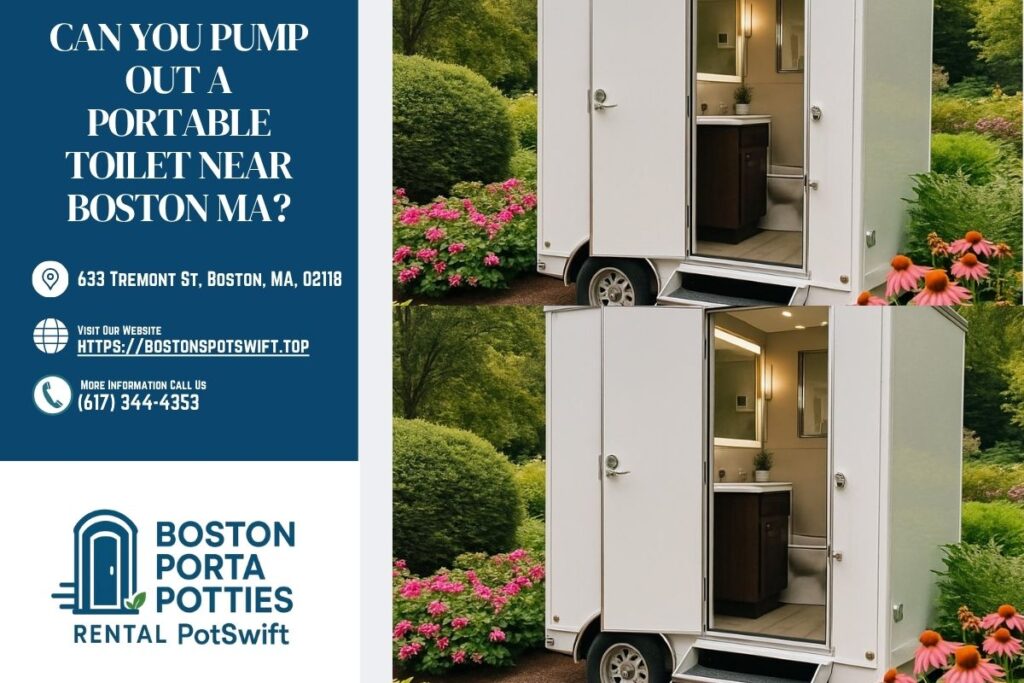
When a portable toilet reaches capacity, our technicians deploy specialized vacuum trucks equipped with high-powered pumps and sealed waste tanks. The process begins with connecting reinforced hoses to the unit’s holding tank access point. Our pumps generate a significant suction force, extracting waste and fluids through FDA-compliant sanitation hoses into the truck’s sealed containment system.
You’ll notice our technicians follow strict safety protocols: wearing protective equipment, securing the work area, and monitoring pressure gauges throughout extraction. We then flush the tank with sanitizing solution to eliminate residue and odors. The entire procedure typically takes 10-15 minutes per unit.
Our vacuum trucks transport waste directly to EPA-approved treatment facilities, where it undergoes proper processing. This closed-loop system guarantees environmental compliance while maintaining hygiene standards you expect from modern sanitation services.
See also: porta potty rental near Boston MA
Industrial vacuum trucks form the backbone of portable toilet pumping operations, featuring reinforced steel tanks that hold 1,500 to 3,000 gallons of waste material.
You’ll find these vehicles equipped with high-powered vacuum pumps generating 400-600 CFM of suction force, enabling efficient waste extraction in minutes rather than hours.
The pumping system features telescopic hoses with quick-disconnect couplings, enabling technicians to maintain a safe distance during service.
Heavy-duty filtration units prevent debris from damaging pump mechanisms, while pressure gauges monitor system performance in real-time.
Modern trucks incorporate GPS tracking and digital tank level sensors, which optimize route efficiency and prevent overfill situations.
You’re also getting advanced odor suppression systems that deploy enzymatic compounds during pumping, minimizing environmental impact while maintaining compliance with Massachusetts sanitation regulations.
Upon arrival at your site, technicians conduct a preliminary safety assessment, checking for overhead obstacles, unstable ground conditions, and adequate clearance for vehicle positioning.
| Phase | Action | Duration |
|---|---|---|
| Preparation | Position vacuum truck, deploy hoses, don PPE | 5-7 minutes |
| Extraction | Insert vacuum line, remove waste, rinse interior | 8-12 minutes |
| Sanitization | Apply enzymatic treatment, clean surfaces, restock | 3-5 minutes |
Following extraction, technicians verify complete waste removal through visual inspection. They’ll then pressure-wash interior surfaces using EPA-approved sanitizers that eliminate pathogens while maintaining environmental compliance. The final step involves restocking consumables, such as toilet paper, hand sanitizer, and deodorizer, before documenting service completion. You’ll receive a digital confirmation with timestamp verification, ensuring accountability and maintaining the integrity of your rental schedule.
Standard portable toilets require pumping every 1-3 days under normal usage conditions; however, more frequent service is necessary during high-traffic events.
You should proactively monitor waste levels rather than waiting until units reach capacity, which compromises sanitation standards and the user experience.
Critical pumping indicators include:
You’ll enhance operational efficiency by implementing scheduled pumping based on predictive usage metrics, rather than relying on reactive maintenance protocols.
Monitor waste levels reaching 75% capacity—this threshold triggers urgent service requirements.
You’ll notice overpowering odors that penetrate beyond the unit’s containment system, indicating bacterial proliferation and a compromised ventilation system.
Surface contamination on toilet seats, floors, or door handles indicates overflow conditions that require immediate intervention.
Watch for non-functional flush mechanisms and depleted hand sanitizer stations, which create unsanitary user experiences.
Visible waste accumulation around the base suggests structural integrity issues or tank capacity exceedance.
When multiple units at your site simultaneously exhibit these indicators, you’re facing systematic service delays that demand expedited pumping coordination with PotSwift’s emergency response team.
Construction sites with 10-15 workers require portable toilet pumping every 1-2 weeks, while high-traffic events with more than 50 users per unit demand same-day or next-day service intervals.
You’ll optimize sanitation protocols by implementing predictive maintenance schedules based on usage metrics rather than arbitrary timelines.
Usage-Based Pumping Intervals:
You’ll reduce operational disruptions by partnering with Boston Porta Potties Rental PotSwift’s GPS-tracked fleet management system for real-time service coordination.
Licensed waste management contractors hold the legal authority to pump portable toilets in Massachusetts, as state regulations prohibit unauthorized handling of septage and human waste.
You’ll need certified professionals who maintain proper DEP permits and have access to the disposal facility. PotSwift partners with EPA-compliant technicians equipped with vacuum trucks designed for efficient waste extraction and transport.
Don’t attempt DIY pumping—you’d face substantial fines and environmental violations.
Professional contractors utilize advanced GPS routing systems and real-time scheduling platforms to optimize service delivery. They’re trained in spill containment protocols and emergency response procedures that protect Boston’s watershed.
When selecting a pumping service, verify that their Massachusetts hauler’s license, insurance coverage, and disposal facility agreements are in order.
Modern contractors employ tracking technology that provides transparent service documentation and regulatory compliance records for your projects.
Massachusetts mandates that all portable toilet pumping operations must be conducted by companies holding valid septage hauler licenses issued by the Department of Environmental Protection.
You’ll need to verify credentials before engaging any service provider, as unlicensed operations expose you to regulatory penalties and environmental hazards.
Licensed waste management companies provide critical safeguards:
You’re investing in regulatory compliance and environmental stewardship when you select properly credentialed pumping services.
When you’re managing temporary facilities at events or job sites, specialized pumping providers deliver service models distinct from standard residential operations.
These companies deploy vacuum trucks equipped with high-capacity tanks and rapid-pump systems designed for quick turnaround times during active events. You’ll find they integrate GPS tracking for fleet coordination and real-time service monitoring across multiple locations.
Construction site providers implement scheduled pumping protocols based on occupancy calculations and the duration of the job.
They utilize manifold systems that connect multiple units to centralized waste collection points, reducing the frequency of individual services. Advanced operators offer telemetry-enabled units that transmit fill-level data, triggering automated service dispatch before capacity issues arise.
This predictive approach eliminates overflow risks while optimizing pump-out intervals, ensuring continuous availability throughout your project timeline.
Standard portable toilet pumping in the Boston area ranges from $75 to $150 per service call, with pricing variables determined by unit accessibility, waste volume, and service frequency requirements.
You’ll encounter cost variations based on several operational factors:
PotSwift’s transparent pricing model eliminates hidden fees while rewarding clients who schedule regular maintenance intervals.
You’ll enhance cost efficiency by establishing predictable service schedules that align with actual usage patterns, rather than relying on reactive pumping approaches.
Three primary pricing tiers define portable toilet pumping services across Boston’s metropolitan region: basic residential ($75-$100), commercial standard ($100-$125), and high-volume industrial ($125-$150) per unit per service.
You’ll encounter additional charges for emergency pumping ($50-$75 surcharge), weekend services (a 25-40% premium), and remote location fees ($30-$50).
Volume discounts typically become available at five units, resulting in a 15-30% reduction in per-unit costs.
Boston Porta Potties Rental PotSwift’s transparent pricing structure eliminates hidden fees through GPS-tracked service verification and digital invoicing.
You’re receiving real-time cost calculations based on location accessibility, waste volume metrics, and service frequency requirements.
Smart scheduling algorithms optimize route efficiency, translating operational savings directly to competitive rates while maintaining strict adherence to Massachusetts Environmental Protection regulations.
Geographic accessibility directly impacts your pumping costs through distance-based fuel surcharges, terrain navigation complexity, and equipment deployment requirements.
Key Cost Variables:
You’ll optimize costs by scheduling regular maintenance, ensuring clear access routes, and consolidating multiple units into single service visits across your event or project site.
Regular maintenance between scheduled pumpings extends the usability of your portable toilet and protects user health.
You’ll want to implement a proactive cleaning protocol that addresses high-touch surfaces and waste accumulation. Stock units with commercial-grade sanitizers, antibacterial wipes, and adequate tissue supplies.
Monitor waste levels using tank indicators—don’t wait until they’re full. Ventilation optimization prevents odor buildup and bacterial growth. Install advanced air circulation systems or enzymatic deodorizers that break down waste organically.
You should inspect door latches, toilet seats, and hand sanitizer dispensers on a weekly basis for proper functionality. Deploy IoT sensors to track usage patterns and automatically trigger service alerts.
Temperature extremes affect chemical effectiveness, so adjust additive concentrations seasonally. Consider antimicrobial coatings on surfaces to reduce pathogen transmission.
Boston Porta Potties Rental PotSwift offers extensive maintenance programs tailored to your specific requirements.
Establishing a systematic service schedule prevents operational failures and maintains sanitary conditions across your portable toilet fleet.
You’ll need to implement frequency protocols based on usage intensity, event duration, and occupancy rates. Standard construction sites require weekly servicing, while high-traffic events demand daily or twice-daily pump-outs.
Critical scheduling parameters include:
You can harness PotSwift’s automated scheduling platform to eliminate guesswork.
Our predictive algorithms analyze historical usage data and dynamically adjust servicing frequencies, ensuring your units never reach capacity while minimizing unnecessary service visits.
When selecting chemical solutions for portable toilet maintenance, you must prioritize formaldehyde-free, enzyme-based products that break down waste organically while neutralizing odor-causing bacteria.
These bio-enzymatic formulations accelerate decomposition while maintaining environmental compliance with Massachusetts wastewater regulations.
You’ll need to apply specialized deodorizers after each pumping cycle to ensure thorough coverage of the bowl and tank.
Quaternary ammonium compounds provide effective disinfection without corroding plastic components or damaging seals.
Avoid chlorine-based products that compromise structural integrity over time.
For Boston’s variable climate conditions, select temperature-stable solutions that perform reliably during winter freezes and summer heat.
You should implement a dual-treatment protocol: enzyme treatments for waste breakdown and separate surface sanitizers for high-touch areas.
This systematic approach enhances sanitation efficacy while extending equipment longevity and reducing the frequency of maintenance.
You can pump out your own portable toilet in Boston, but you’ll need specialized vacuum equipment, proper disposal permits, and adherence to Massachusetts sanitation regulations. Most users find professional pumping services more cost-effective and compliant than DIY approaches.
Yes, you’ll need to follow Massachusetts Title 5 regulations and Boston’s sanitary code requirements. You must dispose of waste at approved septage treatment facilities, maintain proper manifests, and use licensed transporters for commercial portable toilet servicing.
After pumping, your waste is transported to licensed treatment facilities, where it undergoes EPA-compliant processing. Advanced separation systems extract solids, treat liquids through biological filtration, and convert materials into environmentally safe byproducts—ensuring responsible, sustainable waste management.
You’ll need permits for portable toilets on public property or streets in Boston neighborhoods. Private property placements typically don’t require permits, but you should verify zoning compliance and contact Boston’s Public Works Department for specific requirements.
You’ll need specialized heating equipment and antifreeze solutions to safely pump frozen portable toilets. We’ve developed thawing protocols using heated hoses and tank warmers, ensuring efficient waste removal even in Boston’s harshest winter conditions without damaging units.




© 2026 Boston Porta Potties Rental PotSwift. All Rights Reserved.